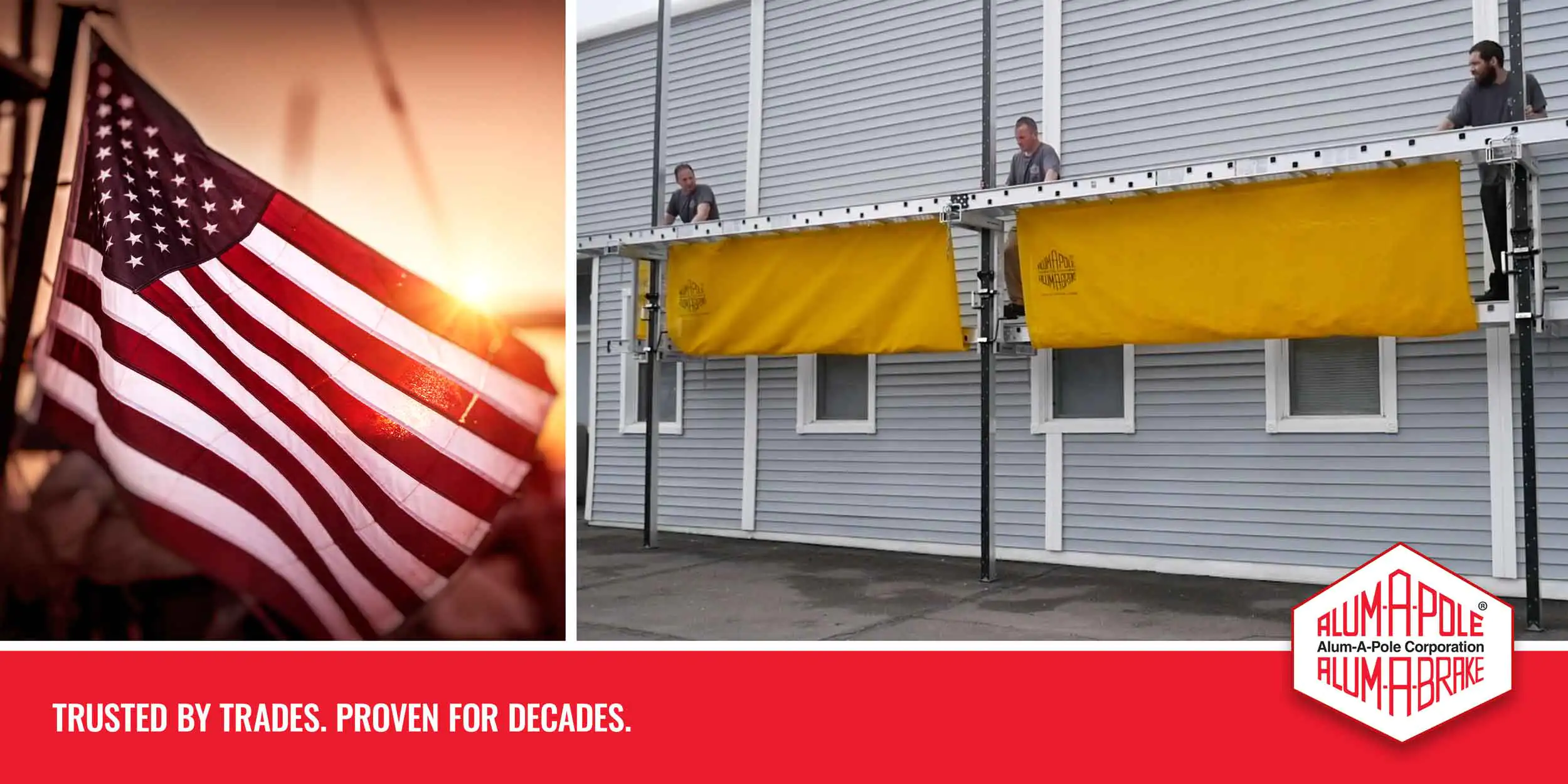


Pump jack scaffolding is a common sight on siding, window, and exterior renovation projects. For many contractors, it’s the ideal combination of mobility, reach, and efficiency when working at height.
But like any elevated work platform, pump jack systems must be installed and used correctly to be safe and compliant. The Occupational Safety and Health Administration (OSHA) has specific requirements for how pump jack scaffolds are erected, supported, and operated. When these requirements are overlooked or ignored, the consequences can go far beyond an OSHA citation. Improper setup can lead to instability, falls, equipment failure, and serious jobsite injuries.
Understanding OSHA pump jack scaffolding requirements helps contractors protect their crews, keep projects moving, and maintain compliance during inspections.
Why Pump Jack Scaffold Safety Matters
Pump jack scaffolds are unique compared to traditional scaffolding. Instead of a freestanding tower, they rely on vertical poles attached to the structure, with a mechanical jack system that raises and lowers the platform.
Because the system moves and relies on the building for support, stability and proper installation are critical.
When pump jack scaffolds are improperly assembled or overloaded, they can:
- Shift or lean away from the structure
- Slide down poles unexpectedly
- Collapse under excess weight
- Create fall hazards for workers
OSHA Pump Jack Scaffold Requirements
Pump jack scaffolds fall under OSHA 29 CFR 1926 Subpart L, with specific provisions covering pump jack systems.
Contractors must understand these core requirements:
Proper Pole Installation
Pump jack scaffolds must be supported by vertical poles that are securely attached to the structure.
These poles must:
- Be straight and structurally sound
- Be secured with metal brackets or equivalent support devices
- Be properly braced to prevent movement
Pump Jack Scaffold Bracing Requirements
Because pump jack scaffolding relies on poles secured to the structure being worked on, OSHA requires them to be stabilized using rigid triangular bracing.
Under OSHA 29 CFR 1926.452(j), pump jack scaffold poles must be braced:
- At the bottom
- At the top
- At additional intervals as necessary to maintain stability
While OSHA does not specify an exact number of braces, the vertical distance between braces should be no more than about 10 feet. This spacing helps prevent pole flexing or movement under load.
Typical Bracing Layouts
In practice, pump jack scaffold poles are commonly braced as follows:
| Pole Height | Typical Bracing Layout |
|---|---|
| 10–12 ft | Bottom + top brace (2 braces) |
| 18–20 ft | Bottom + mid + top (3 braces) |
| 28–30 ft | Bottom + ~10 ft + ~20 ft + top (4 braces) |
| 35–40 ft | Bottom + ~10 ft + ~20 ft + ~30 ft + top (5 braces) |
| 45–50 ft | Bottom + ~10 ft + ~20 ft + ~30 ft + ~40 ft + top (6 braces) |
To stay compliant and maintain safe working conditions, contractors should follow this simple guideline: Brace pump jack poles at the bottom, the top, and roughly every 10 feet in between.
Another OSHA rule that often surprises contractors involves moving pump jacks past an existing brace.
If the jack needs to pass a brace during operation, a temporary brace must be installed approximately four feet above the brace being removed. That temporary brace must remain in place until the original brace can be reinstalled.
This requirement ensures the pole remains stabilized during adjustments and prevents dangerous movement while the platform is being repositioned.
Secure Platform Support
Platforms must be fully supported by the pump jack brackets and secured to prevent shifting.
OSHA requires:
- Platforms must be fully planked or decked
- Planking must be capable of supporting the intended load
- Gaps between planks must be minimal
The platform must also be kept clear of excessive materials that could overload the system.
Guardrails and Fall Protection
Workers on pump jack scaffolds 10 feet or more above a lower level must be protected by either:
- Guardrail systems
- Personal fall arrest systems (PFAS)
Guardrails are typically the most practical solution for pump jack setups, providing consistent fall protection while workers move along the platform.
Safe Access
Workers must have safe access to the scaffold platform.
OSHA prohibits climbing the pump jack poles themselves. Instead, access should be provided through:
- Ladders
- Approved access systems
- Properly positioned scaffold components
Competent Person Oversight
A competent person must oversee scaffold erection, movement, and dismantling.
This person is responsible for:
- Identifying hazards
- Ensuring proper setup
- Inspecting equipment
- Verifying safe usage
Load Capacity and Material Handling
Pump jack scaffolds are designed primarily for light to moderate loads, making them ideal for siding, trim, window, and exterior repair work.
However, overloading is one of the most common safety violations.
Contractors should avoid:
- Stacking heavy siding bundles on the platform
- Storing large material loads on pump jack scaffolds
- Letting multiple workers concentrate their weight in one area
Instead, materials should be lifted and installed in manageable quantities to keep platform loads within safe limits.
Remember: the 4:1 safety factor only applies when the system is used within its rated capacity.
Environmental Conditions and Jobsite Factors
Pump jack scaffolds are often used on exterior siding projects, which means they are exposed to environmental forces.
Contractors should take additional precautions when working in:
- High winds
- Rain or icy conditions
- Uneven ground conditions
Wind can be especially problematic when installing:
- Vinyl siding
- Fiber cement panels
- Insulated siding systems
- Large trim boards
These materials act like sails and can place unexpected stress on the scaffold system. If conditions become unsafe, work should stop until the scaffold can be safely used again.
Inspection and Daily Safety Checks
OSHA requires scaffolds to be inspected by a competent person before each shift and after any incident that could affect structural integrity.
Daily inspections should confirm:
- Pump jacks are securely attached to poles
- Poles are properly braced and anchored
- Platforms are fully planked
- Guardrails are installed where required
- No components are damaged or loose
Routine inspections help prevent small issues from becoming serious safety hazards.
Final Thoughts
Pump jack scaffolding is one of the most efficient tools for exterior construction work. When installed correctly, it provides contractors with a stable, adjustable platform that makes siding, window, and trim installation faster and safer.
But like any scaffold system, it must be assembled, braced, and used according to OSHA standards. Understanding pump jack scaffold requirements allows contractors to work confidently at height while protecting both their crews and their projects.
Alum-A-Pole is a U.S.-based manufacturer of professional scaffolding systems, siding brakes, and Pro-Trim flashing products, proudly made in Scranton, Pennsylvania. Founded in 1980 by a contractor who revolutionized jobsite safety, Alum-A-Pole builds durable, American-made tools designed for real work in the field and backed by responsive support. For over 40 years, our products have delivered dependable performance, innovative design, and peace of mind for contractors and builders nationwide.
Contact us to learn how Alum-A-Pole products and accessories can elevate your jobsite safety.