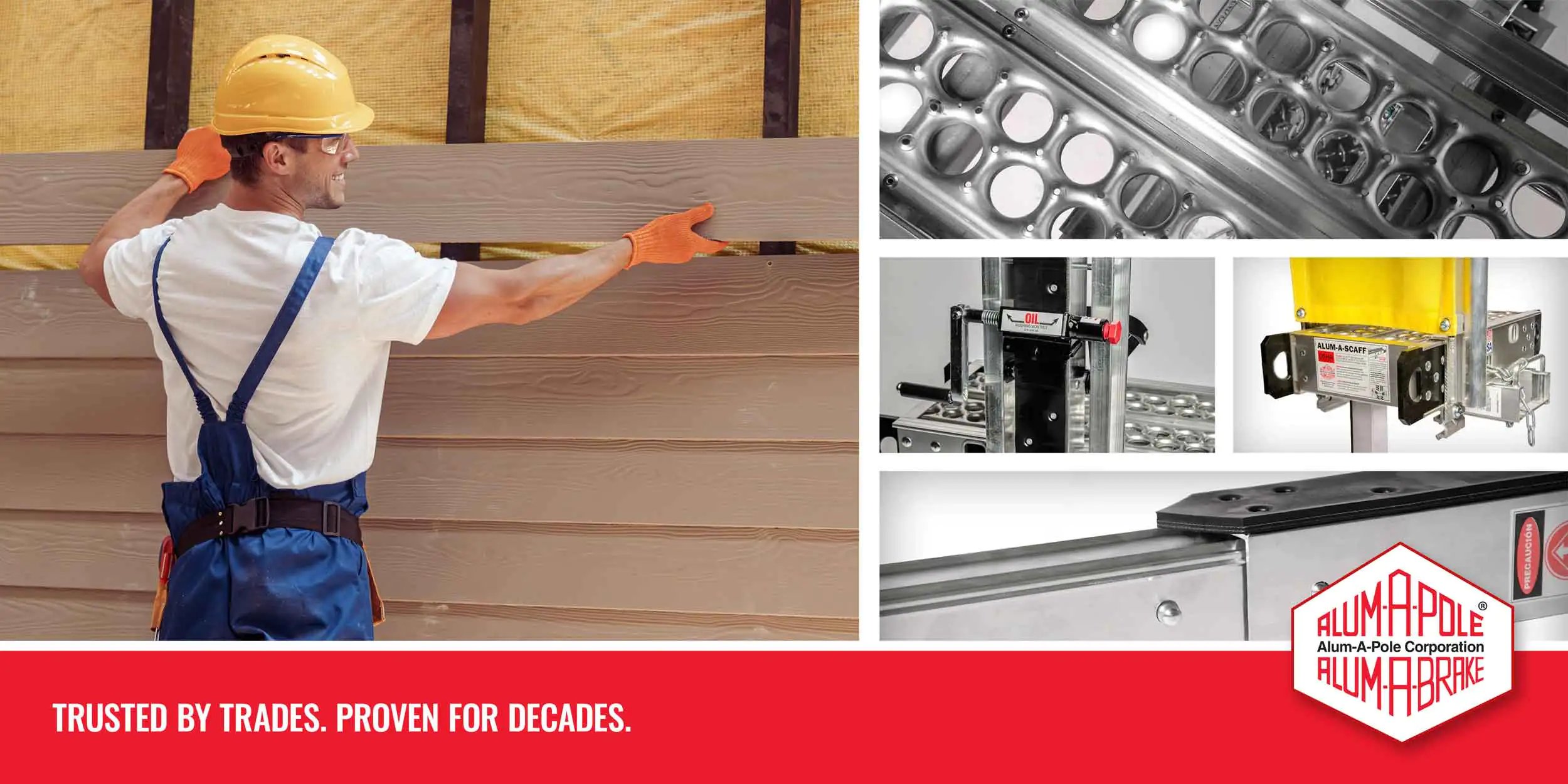

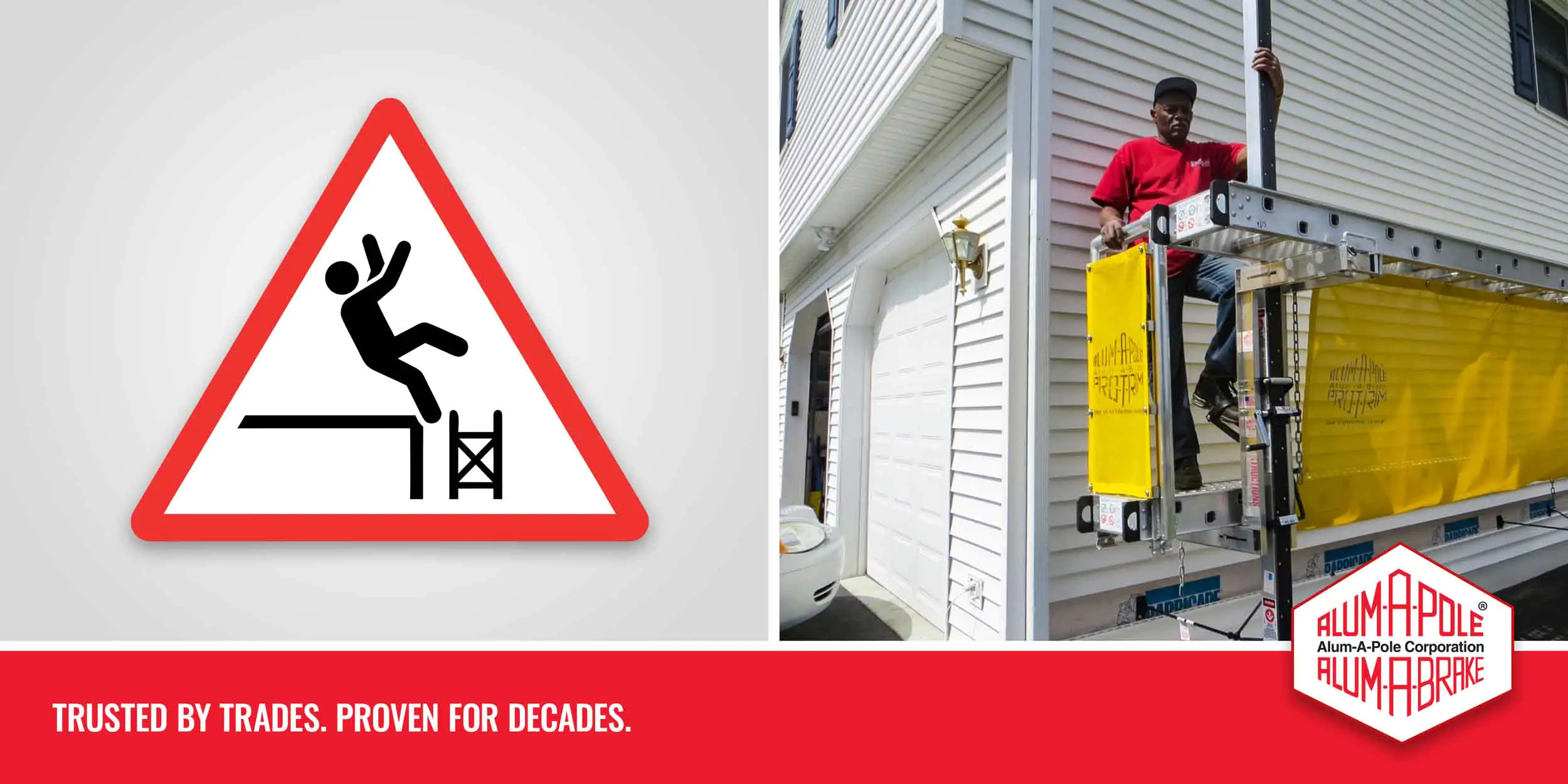
Falls are the leading cause of fatalities in construction. According to OSHA, falls account for roughly one-third of all construction deaths each year and siding work on multi-story structures is one of the highest-risk tasks a crew can take on. Unstable platforms, shifting ladders, and improvised work surfaces put workers in precarious positions dozens of feet off the ground, often for hours at a time.
The good news: most fall incidents on siding jobs are preventable. They’re typically the result of inadequate equipment, poor setup practices, or the wrong scaffolding system for the job.
Understanding the risks, and choosing the right platform, can make the difference between a clean, safe project and a tragedy.
Why Multi-Story Siding Work Is Uniquely Dangerous
Unlike roofing, which keeps workers in a more predictable zone, siding requires workers to move continuously across the entire face of a structure, horizontally and vertically, while carrying materials, using their tools, and working close to the platform’s edge. That constant movement means more opportunities for missteps.
Several factors compound the risk on taller structures:
- Ladder dependency. Many crews default to extension ladders for siding work, repositioning them repeatedly throughout the day. Every time a worker climbs, descends, or repositions a ladder, the fall risk resets. Ladders also offer no stable surface for material staging, forcing workers to make extra trips or awkwardly balance supplies while working.
- Unsecured platforms. Improvised scaffolding, like sawhorses, stacked material, rented sectional systems assembled without proper training can shift, tip, or collapse under dynamic load. Siding installation involves repetitive lateral movement and tool vibration, both of which stress platform connections over time.
- Fatigue. On multi-story jobs, workers may spend an entire day working at height. As physical fatigue sets in, coordination and judgment decline. A platform that felt stable in the morning can become a fall hazard by afternoon if a worker is too tired to compensate for subtle instability.
- Edge exposure. Siding work keeps crews within inches of an open edge for most of the workday. Without a guardrail system or a platform with adequate width, one unexpected movement like a tool snag, material shift, or brief loss of balance, can be catastrophic.
The Case for Pump Jack Scaffolding on Siding Projects
Pump jack scaffold systems are purpose-built for exactly this type of work. Unlike frame scaffolding, which requires significant ground-level assembly and doesn’t adapt easily to irregular terrain, pump jack systems attach directly to poles anchored against the structure. Workers raise and lower the platform with a foot-operated pump mechanism, allowing the platform to follow the work zone rather than forcing workers to adapt to a fixed height.
For siding applications specifically, pump jacks offer several safety advantages:
- Continuous platform access. A properly configured pump jack system provides a stable, level work surface that runs the full length of the work zone. Workers aren’t climbing and repositioning constantly, they’re standing on a solid platform and moving the scaffold to meet them. That reduction in ladder transitions alone eliminates a significant category of fall exposure.
- Adjustable working height. Because the platform raises and lowers on demand, workers can position themselves at an ergonomically correct height for each course of siding. Overreaching, one of the most common contributors to loss of balance, is dramatically reduced when the platform is set correctly.
- Pole attachment stability. Pump jack poles brace directly against the building, creating a rigid, anchored system rather than a freestanding tower. This eliminates the tipping and lateral shift risks associated with frame scaffolding on uneven ground, which is common on residential and light commercial sites.
- Material staging on the platform. A proper pump jack plank setup gives workers room to stage materials at elevation, reducing trips up and down and keeping workers focused on the task rather than supply logistics.
Setup Practices That Directly Affect Fall Risk
Even the best scaffolding system creates hazards when set up incorrectly. These are the setup practices that matter most for fall prevention:
- Pole spacing and bracing. Poles should be spaced according to the manufacturer’s load specifications, typically no more than 10 feet apart for standard planking loads. Wider spacing increases platform flex, which affects stability and worker confidence. Each pole must be properly braced at the top and bottom to prevent lateral movement.
- Plank quality and inspection. Scaffold-grade planks should be inspected before every use for cracks, knots (if using wooden walk planks), warping, or damage. A compromised plank can fail under dynamic load without warning. Never substitute dimensional lumber from a job site pile for rated scaffold planking.
- Guardrail systems. OSHA requires fall protection at heights of six feet or more in construction. On multi-story siding projects, that means guardrails on open sides and ends of platforms. A pump jack system without a guardrail configuration is not compliant and puts workers at serious risk.
- Foundation and footing. The base of each pole must rest on a solid, level footing. Soft ground, sloped grade, or debris under the base can cause the pole to shift or sink during use. Use base plates and mud caps/sills appropriate to the ground conditions.
Training and Culture Are Part of the Safety System
Equipment is only part of the equation. Falls happen when workers feel pressure to skip steps, when setup is rushed at the start of a long day, or when no one on the crew has been trained to recognize hazards before they become incidents.
Effective fall prevention on siding projects requires regular safety training that addresses scaffolding hazards specifically, clear accountability for setup inspection before work begins each day, and a crew culture where stopping to address a safety concern is expected, not penalized.
Built in the USA for the Work Americans Do
At Alum-A-Pole, we manufacture pump jack scaffolding systems built to meet the demands of professional siding contractors across the country. Our systems are engineered for stability, designed for fast setup, and built to exceed OSHA standards because the crew doing the work deserves equipment that’s serious about safety.
If you’re evaluating scaffolding for an upcoming multi-story siding project, we’re happy to help you find the right configuration for your job. Contact us to talk through your needs or request a quote.
Alum-A-Pole is a U.S.-based manufacturer of professional scaffolding systems, siding brakes, and Pro-Trim flashing products, proudly made in Scranton, Pennsylvania. Founded in 1980 by a contractor who revolutionized jobsite safety, Alum-A-Pole builds durable, American-made tools designed for real work in the field and backed by responsive support. For over 40 years, our products have delivered dependable performance, innovative design, and peace of mind for contractors and builders nationwide.