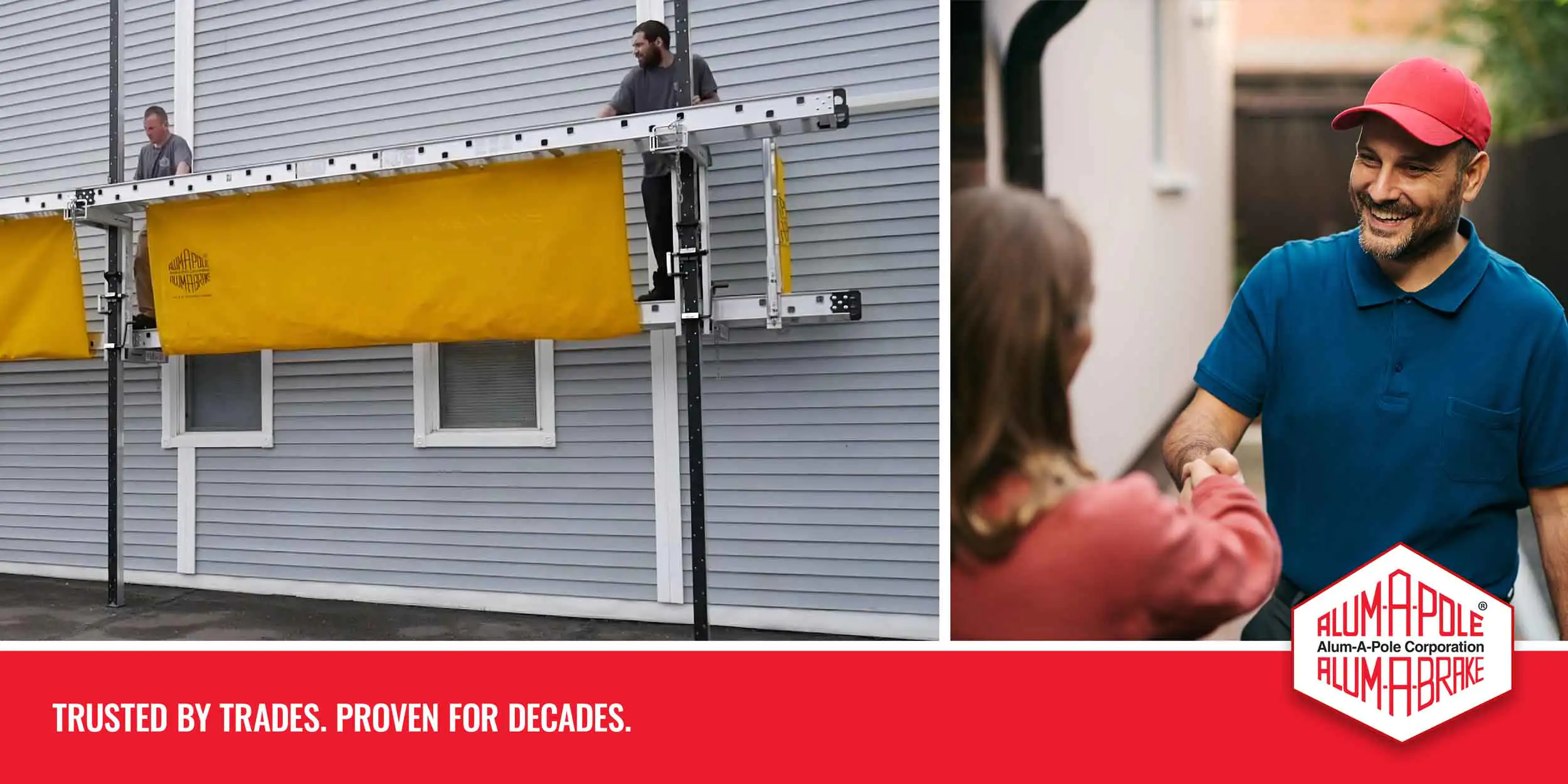

Every day, contractors trust scaffold systems to provide a safe elevated work area while carrying tools, materials, and crew members. For siding installers, a scaffold isn’t just a piece of equipment, it’s your workplace.
Even the best scaffolding systems require routine inspections to help ensure they remain safe and functional. A daily inspection only takes a couple of minutes but can identify problems before they become costly delays or injuries.
Whether you’re working on a residential siding project, soffit installation, window replacement, or exterior renovation, a consistent inspection routine should be part of every crew’s morning preparation.
In this guide, we’ll walk through what siding contractors should inspect each day before stepping onto a scaffold system.
Why Daily Scaffold Inspections Matter
Scaffolding is exposed to a lot between projects.
Weather changes. Materials shift. Components loosen. Equipment gets bumped by ladders, lifts, vehicles, and building materials. Even if everything was fine yesterday, conditions can change overnight.
According to OSHA, scaffold-related accidents often result from issues that could have been identified during routine inspections, including damaged components, improper assembly, unstable foundations, or missing safety equipment.
A daily inspection helps contractors:
- Identify damaged components
- Verify system stability
- Confirm proper setup
- Reduce downtime
- Maintain OSHA compliance
- Protect workers from falls and injuries
Most importantly, inspections create consistency and accountability across the entire crew, and that helps create a culture of safety.
Who Should Perform the Inspection?
OSHA requires scaffolds to be inspected by “a competent person” before each work shift and after any event that could affect structural integrity. A competent person is someone capable of identifying existing and predictable hazards and authorized to take corrective action.
For many siding contractors, this may be:
- Crew leaders
- Foremen
- Supervisors
- Experienced installers trained on scaffold systems
The key is to make sure inspections are completed consistently and documented.
What to Inspect Every Day
- Foundation and Ground Conditions
Start at the bottom because scaffold stability depends on what’s underneath it. Inspect for:
- Soft or uneven ground
- Mud, standing water, or washouts
- Settling since the previous day
- Proper placement of base plates and supports
- Obstructions or trip hazards around the work area
Even minor ground movement can affect scaffold stability.
- Poles and Structural Components
Next, inspect all vertical and structural members. Look for:
- Dents
- Bends
- Cracks
- Corrosion
- Excessive wear
- Damaged or missing components
Structural damage should never be ignored. If a component appears compromised, remove it from service immediately.
- Brackets and Connections
Inspect all connection points carefully. Check that:
- Brackets are securely attached
- Fasteners are present and tightened
- Locking mechanisms function properly
- Components are seated correctly
Loose connections can quickly create unsafe working conditions.
- Platforms and Walkboards
Since installers spend most of their day standing on the platform, this area deserves special attention. Inspect for:
- Cracked or damaged planks
- Excessive wear
- Loose decking
- Proper platform support
- Debris accumulation
- Slippery surfaces
Walking surfaces should remain clean and free of unnecessary materials.
- Guardrails and Fall Protection
Fall protection systems should be inspected daily. Verify:
- Guardrails are installed where required
- Components are secure
- No missing sections exist
- Personal fall protection equipment is available and functional if required
Never assume fall protection was left in proper condition after the previous shift.
- Pump Jack Components
For contractors using pump jack scaffolding systems, inspect:
- Pump mechanisms
- Foot levers
- Locks and engagement systems
- Cables or support components
- Signs of wear or damage
Smooth operation is critical for safe elevation adjustments.
- Access Areas
Safe access is often overlooked. Inspect:
- Ladders
- Access points
- Climbing routes
- Entry and exit areas
Workers should never need to improvise access to reach the scaffold.
- Weather Conditions
Weather can significantly impact scaffold safety. Before work begins, evaluate:
- Wind conditions
- Rain
- Ice
- Snow
- Lightning risk
Wet or windy conditions may require additional precautions or temporary work stoppages.
Common Scaffold Inspection Mistakes
Even experienced crews sometimes fall into bad habits so avoid these common mistakes:
- Rushing Through Inspections. A quick glance is not an inspection; take the time to examine each component carefully.
- Assuming Yesterday’s Inspection Is Enough. Conditions change overnight; every shift requires a fresh inspection.
- Ignoring Minor Damage. Small issues often become major problems if left unaddressed; replace damaged components promptly.
- Skipping Documentation. Maintaining inspection records can vastly improve accountability and provide valuable documentation if questions arise later.
Building a Safety-First Culture
A scaffold inspection checklist isn’t simply about compliance; it’s about creating habits that protect workers every day.
Crews that work safely experience fewer interruptions, accidents, and costly delays, and by implementing a consistent daily inspection process, contractors can help ensure their scaffold systems remain safe, reliable, and ready for the work ahead.
Download the Daily Scaffold Inspection Checklist
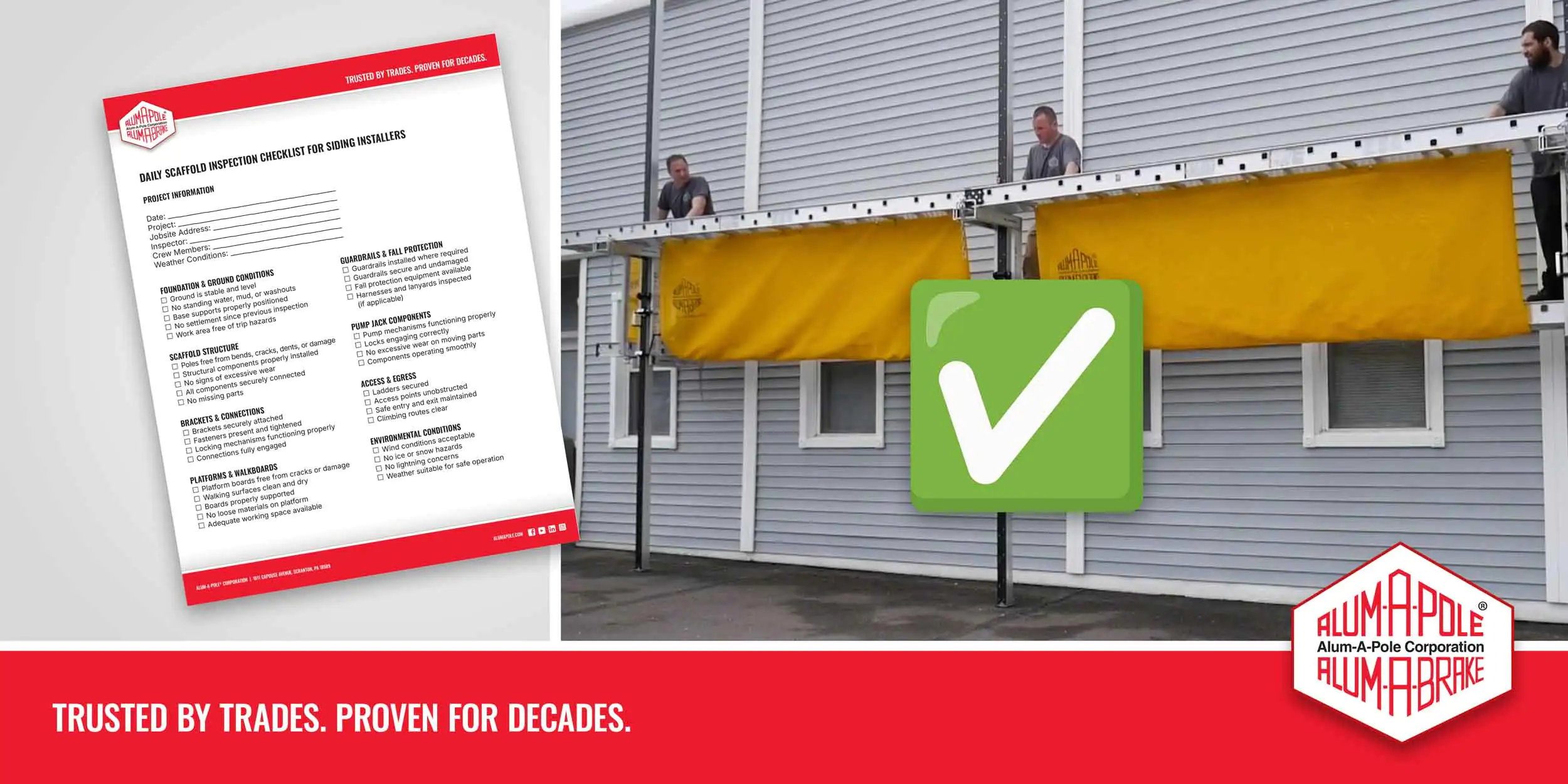
To help crews stay consistent, we’ve created a printable Daily Scaffold Inspection Checklist for Siding Installers.
Use it before every shift to verify scaffold conditions, identify potential hazards, and document inspections.
Download the Free Daily Scaffold Inspection Checklist for Siding Installers!
Alum-A-Pole is a U.S.-based manufacturer of professional scaffolding systems, siding brakes, and Pro-Trim flashing products, proudly made in Scranton, Pennsylvania. Founded in 1980 by a contractor who revolutionized jobsite safety, Alum-A-Pole builds durable, American-made tools designed for real work in the field and backed by responsive support. For over 40 years, our products have delivered dependable performance, innovative design, and peace of mind for contractors and builders nationwide.