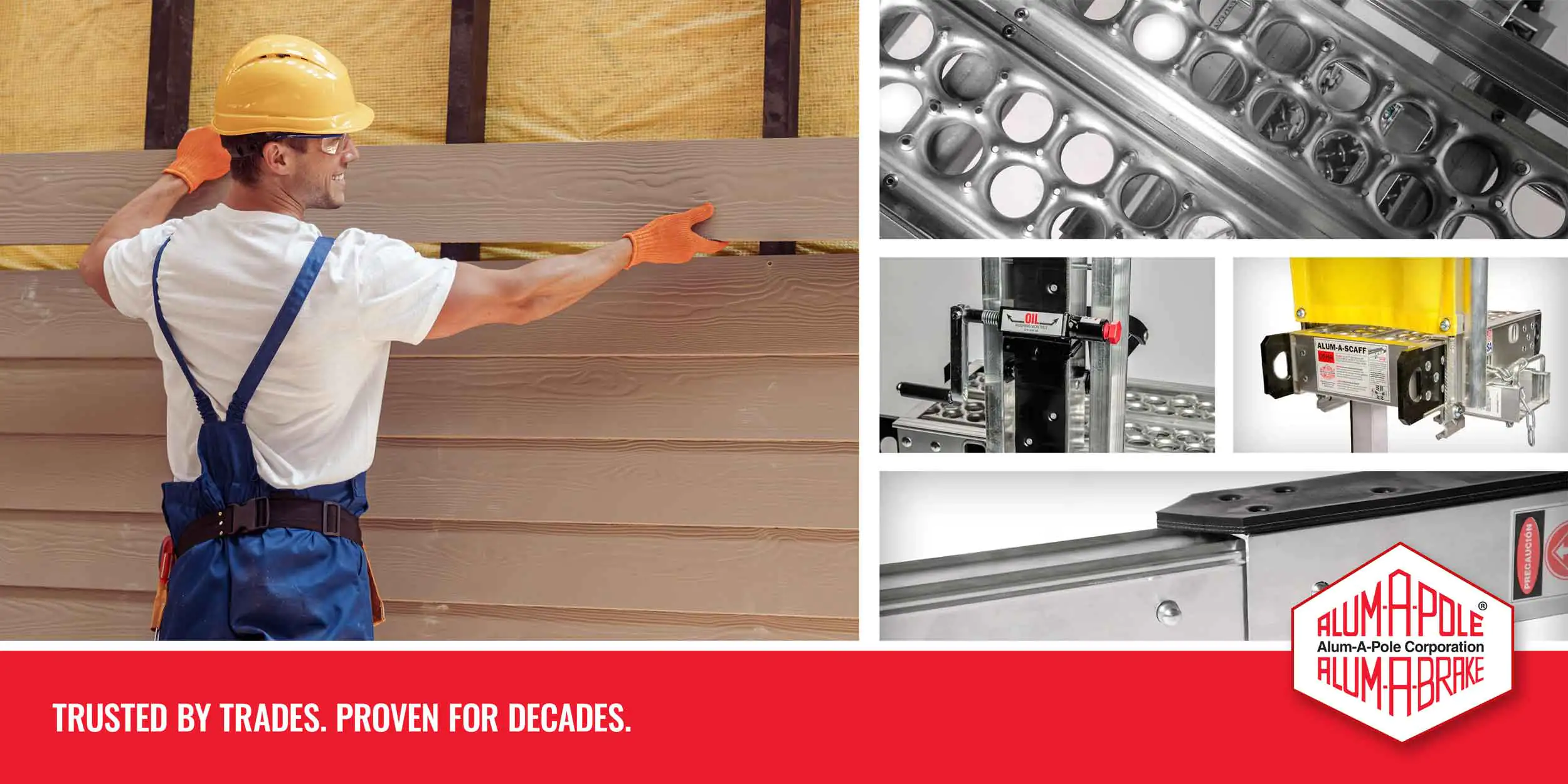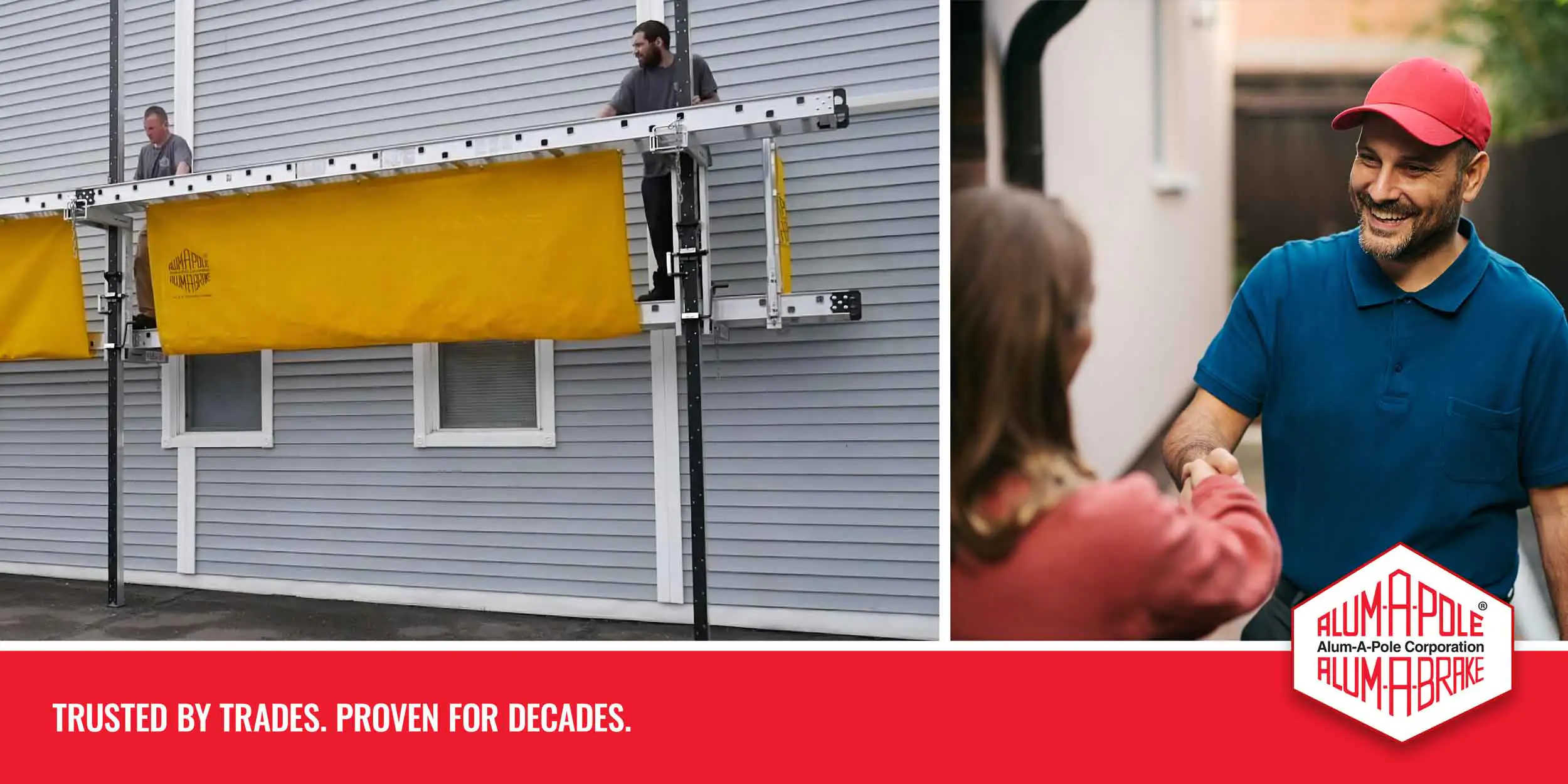
For exterior siding, window, and trim contractors, scaffolding is more than a way to get workers and materials where they need to be.
It’s part of the jobsite. And whether you’ve ever thought about it or not, your jobsite says a lot about your company.
Before a customer ever sees the finished siding, trim, or exterior work, they may see your truck, your crew, your tools – and your scaffolding. What they see can reinforce confidence in your company or raise questions about how the project is being managed.
There’s a big difference between a jobsite that visually communicates, “We’ll figure it out when we get there” versus “We have a system and know what we’re doing.”
Your Equipment Makes an Impression
Customers may not know the difference between one scaffolding system and another, and they probably aren’t evaluating your equipment based on engineering specifications or understanding how a particular pump jack system works.
But they can certainly recognize when a jobsite looks organized.
They notice when equipment appears properly planned for the job. They notice whether the crew seems prepared. And they notice details like uneven walkboards, missing safety netting or other safety features, and mismatched equipment that can make a work area look chaotic rather than controlled.
And those impressions matter.
A professional-looking setup can communicate that your company:
- Plans ahead
- Invests in quality equipment
- Takes safety seriously
- Values efficiency
- Has experienced crews
- Takes pride in its work
- Treats the customer’s property with respect
Your scaffolding isn’t necessarily what wins the job, but it can contribute to the customer’s overall perception of how you operate. Given the importance of word-of-mouth referrals and social media reviews, a professional scaffolding setup can certainly influence positive sentiment towards your company and help you win future jobs.
“We Have a System” Starts Before the Jobsite
Professionalism doesn’t begin when the crew pulls into the driveway. It starts with planning.
The right equipment helps crews think through how they’re going to access the work area, where materials need to be, how they will move along the wall and how the equipment will support the project from beginning to end.
That’s especially important for exterior contractors who spend a significant amount of time working at height. Instead of improvising access from one section to the next, a well-planned scaffolding system can provide a more consistent working platform and help crews maintain an efficient workflow because every unnecessary adjustment, reposition, or interruption takes time away from the work itself.
Good equipment supports a good process.
Your Equipment Says Something to Your Employees, Too
Customer perception is only part of the equation. Your equipment also sends a message to your crews.
When a company invests in professional, high-quality equipment and establishes clear processes for using it, employees see that the company takes their work, and their safety, seriously. That can help reinforce a culture where preparation and consistency matter.
Of course, the opposite can also be true.
When crews are routinely expected to improvise, work with inadequate equipment, or solve the same access problems day after day, inefficiency can become part of the job. That slows down crews, slows down jobs, decreases the number of jobs you can schedule, and, most importantly, slows down growth.
Nobody wants to spend more time moving equipment than installing siding.
The right scaffolding system won’t solve every jobsite challenge, but it can give your crew a better foundation for doing the work efficiently.
Safety Is Part of the Message
Safety should never be treated as a marketing exercise. It’s a responsibility, but the equipment and systems a contractor chooses still communicates something about the company’s safety culture.
A company that uses appropriate equipment and establishes consistent procedures demonstrates that safety is part of how it approaches the job, not something addressed only when a problem occurs.
For employees, that’s important. For customers, it’s reassuring.
And for the business, a strong safety culture can support better jobsite organization, fewer disruptions, and more consistent work practices.
Of course, contractors should always follow applicable OSHA requirements, manufacturer instructions, and site-specific safety procedures. No scaffolding system eliminates the need for proper training, inspection, and safe work practices.
Efficiency Is Part of Professionalism
There’s another reason your scaffolding matters: time is money. Exterior contractors know how quickly small inefficiencies can add up.
- Move the ladder.
- Move it again.
- Climb down.
- Reposition.
- Bring materials closer.
- Adjust the setup.
- Repeat.
One small interruption doesn’t seem like much but multiply it across a project, or dozens of projects, and the cost becomes much more significant.
A well-designed pump jack scaffolding system can help crews maintain access along an exterior wall rather than repeatedly stopping to reposition equipment, so more time is spent doing productive work.
Productivity isn’t just an internal concern; customers care about schedules, too.
When equipment supports a more efficient workflow, it can help contractors keep projects moving and make better use of valuable labor hours.
The Customer May Not Know Your Equipment. But They Know How It Feels.
Think about the difference between walking onto a jobsite that looks organized and one that looks improvised. You may not be able to identify exactly what’s different, but you feel it.
One gives you confidence. The other makes you wonder what else might have been overlooked.
That’s the real value of professional equipment.
It’s not necessarily about impressing someone with the brand of scaffolding on the jobsite. It’s about creating an environment that reflects preparation, organization, and competence.
This is the takeaway: Your equipment becomes part of the customer experience.
Investing in Equipment Is Investing in Your Reputation
Contractors often evaluate equipment based on practical questions:
- How much does it cost?
- How long will it last?
- How difficult is it to set up?
- Will it work for the projects we typically perform?
Yes, those questions are important, but there’s another question worth asking: What does this equipment say about the way we run our business?
Equipment that supports better workflow, consistent practices, and professional jobsites can become part of a company’s larger operating system.
It tells your crew that you’re prepared, it tells your customers that you take the work seriously, and it tells potential employees that you’ve built a company with systems rather than one that relies on improvisation.
That’s a different kind of return on investment that’s harder to measure, but real nonetheless.
Build a System, Not Just a Jobsite
The best contractors aren’t successful because they have the most equipment. They’re successful because they know how to use the right equipment to create repeatable processes.
That’s the difference between “We’ll figure it out when we get there” and “We have a system.”
For more than four decades, Alum-A-Pole has focused on building professional scaffolding systems designed around the realities of exterior construction. From pump jack scaffolding to siding brakes and other jobsite equipment, Alum-A-Pole products are designed to help contractors work efficiently and confidently from project to project.
Because the equipment you bring to the jobsite isn’t just there to get the work done. It helps show people how you do business.
Alum-A-Pole is a U.S.-based manufacturer of professional scaffolding systems, siding brakes, and Pro-Trim flashing products, proudly made in Scranton, Pennsylvania. Founded in 1980 by a contractor who revolutionized jobsite safety, Alum-A-Pole builds durable, American-made tools designed for real work in the field and backed by responsive support.